Accurate MIS Implementations of Safer Mandibular Surgery
To perform a job in jaw surgery one must not just be good at it. You must have the correct tools and be able to utilize them. The use of the tools assists in keeping the patients safe and makes the surgery end up being better. This manual is concerning CERAHI MIS tools. It discusses the period of their implementation and their significance since they are powerful in surgeries where the invasiveness is not too high, particularly in the face and jaw.
Getting Started: Preparedness and Access
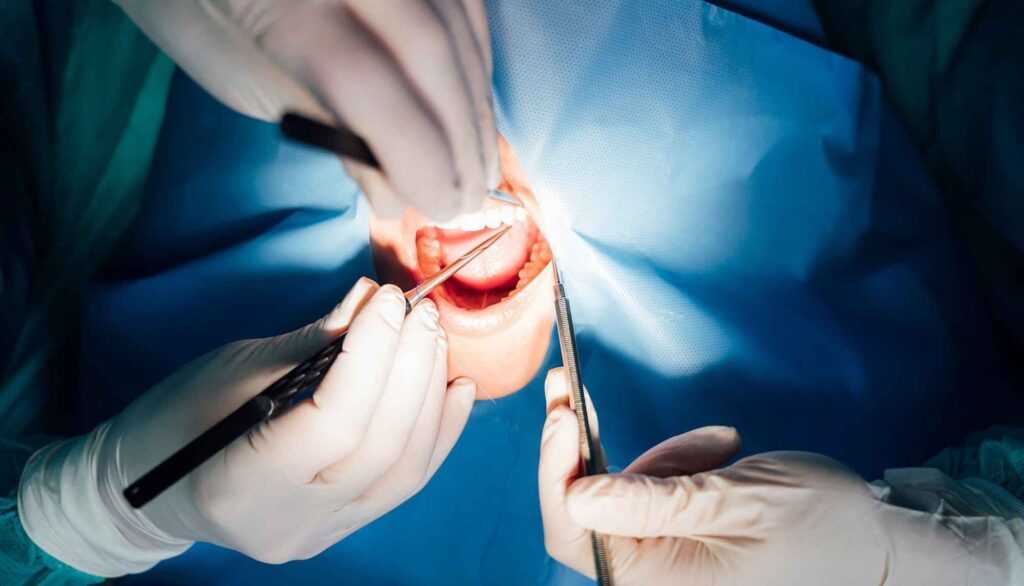
When physicians perform minimally invasive surgery the first thing that they should do is to create a means by which they can reach the section of the body that they are performing surgery. Physicians work with such equipment as retractors and dissectors which help to gently move the soft tissue aside. This will give them a perspective of what they are undertaking and will keep the cut minimal meaning that the patient will not incur many injuries during the surgery that is performed in a minimal way. Minimally invasive surgery is, regarding ensuring that the patient is not hurt excessively.
Primary Maxillary Retraction
Instrument: Double Langenbeck Retractor
This instrument is quite helpful in the step of working on the upper jaw. It makes you have a visual of what you are doing and keeps the tissue surrounding it safe. Enhanced cuts can be worked through that way without a mistake. The device is compact and has two ends and this makes it easy to us
Access Stabilization
Instrument: Reduced Reverse Langenbeck Retractor
It is a very useful tool when you have to pull something slowly and gently. It is ideal for doing anything such as repairing a plate. This makes the tool narrow at the end thus ensuring that it remains steady and the parts around it are not at risk. This translates to having some space for work
Dissection and Tissue Infringement
Instrument: V-Shaped Dissector
This instrument is made up of Wood, metal, plastic and is applied in order to slice through the mandibular ramus up to the temporalis muscle. One of the components of this process is the mandibular ramus.
It comes in two sizes. This is an indication that the condylar segment is easy to manage. The condylar segment is also simple to place in case it is required to be fixed
Deep Contouring and Tunneling
Instrument: Double Straight Dissector
The Double Straight Dissector can be used to reach places that are difficult to reach such as the back of the jaw or the lower jaw angle. It assists you to work in such areas without damaging the tissue surrounding it. The dissector is ideal, in this sort of thing since it is so accurate.
Maintaining a Clear View
Instrument: Curved Spatula
At times, the traditional retractors will interfere with the areas that the doctors require to examine. The curved spatula assists in maintaining the area where surgery is being performed open in order to enable its surgeons to do their work with probable precision even when they are operating in extremely small areas.
Moving and Separating Bone Segments
Whenever the doctor has access to the bone the next thing that they do is to move the bone pieces and separate the bone pieces. The doctors take the tracks that the doctors predetermined beforehand. The surgeons employ some instruments to exert a certain level of force to the bone to ensure that they move the bone safely.The doctors must be careful not to damage the things surrounding the bone. The bone is moved in the direction of the previous plans that were made before the operation. These are the lines on which the doctors transport the bone pieces. This plays a crucial role and the surgeons must be quite attentive when mobilizing and separating the bone segments.
Starting the Split
Instrument: Straight Osteotome
To extract the alveolar bone; or to perforate the alveolar bone (Henderson, 2008). This osteotome is triangular pointed in the tip. The osteotome begins to segregate things. It leaves room to use bigger instruments in the future. This assists the surgeons to remain in authority of the osteotome and what they are doing with the osteotome.
Finishing the Separation
Instrument: Wedge Osteotome
This set instrument is designed to aid bones. It is also designed in a wedge manner and assists in exerting a measured degree of force. This implies that it can keep bones intact so that they do not break. The osteotome is quite good, in assisting to extract results when using it to part bones. The primary aim of the osteotome should be to provide controlled force.
Clearing Out Fragments
Instrument: Ostectomy Forceps
When we put the pieces of bones back in position these forceps remove any bits of bone or objects that are in the way. This assists in preparing the location to have the bone attached in the location. Removing the bone fragments is an important step that is done using the forceps. The site is prepared with the help of the forceps to fix bone segments.
Suturing the Bones and Putting Screws
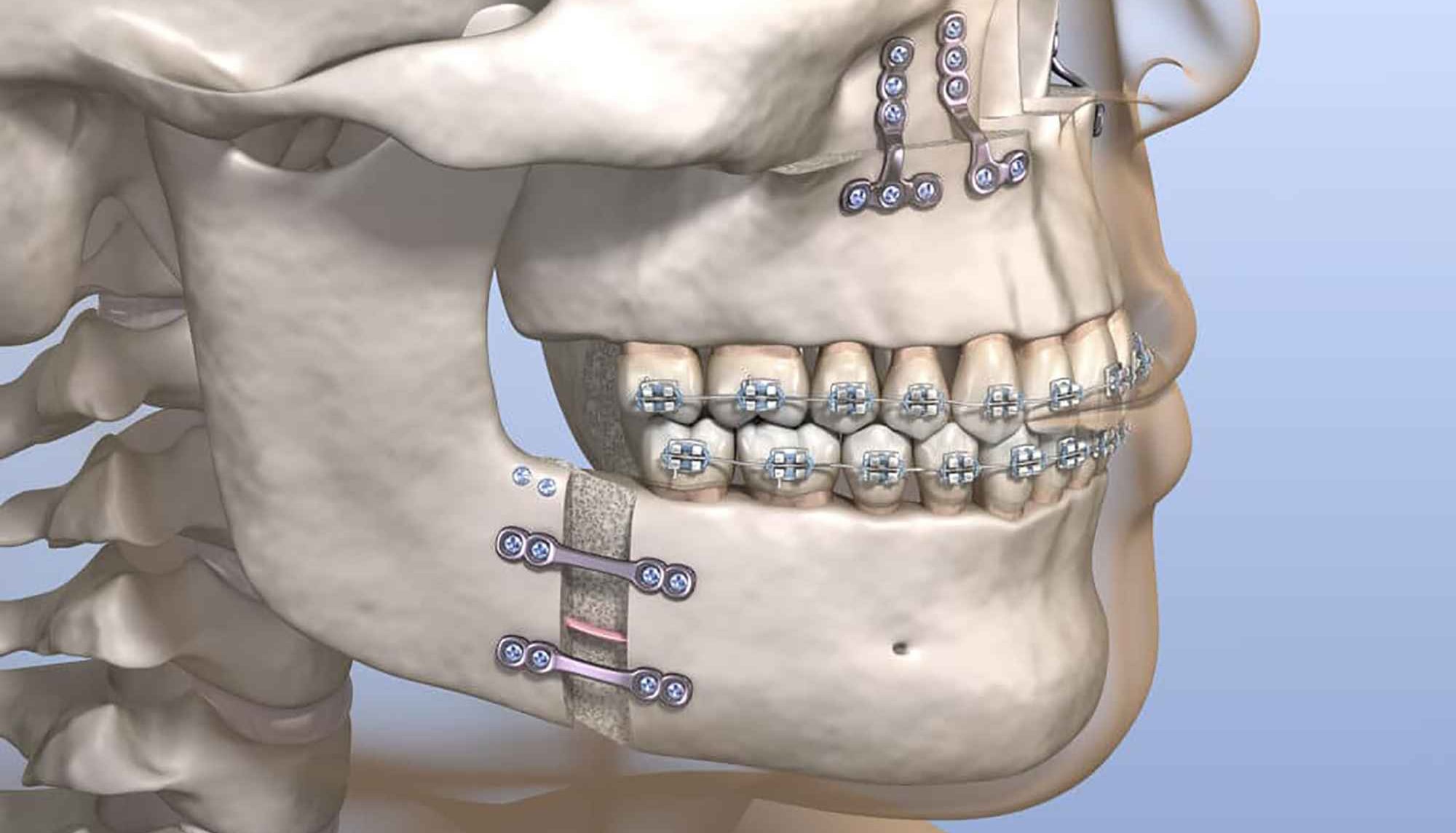
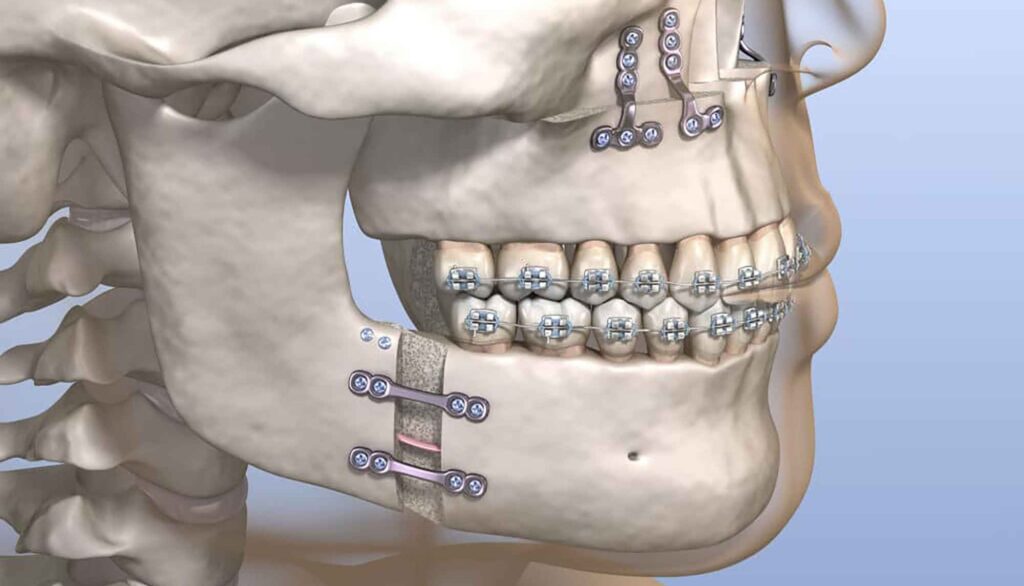
The pieces of the bone are then reassembled together in the place they are required. The physicians employ equipment, such as guided retractors and stabilizers to insert the bone plates and screws in their correct position. This is also useful in keeping the tissue surrounding the bone safe. The bone segments should be juxtaposed in order to heal well.
Mentoplasty Access and Drilling
Instrument: Retractor with Channel
The integrated channel is specifically made to use in mentoplasty by facilitating drilling and screw insertion by using small incisions, minimizing tissue trauma and enhancing accuracy.
Guiding Mandibular Fixation
Instrument: Langenbeck Retractor
When repairing the mandibular this tool assists in positioning the drill and screw. It also preserves the tissue, against getting injured. This retractor simplifies the mandibular fixation and this is a step. It assists in placement of drills and screw placement in mandibular fixation.
Holding Plates Steady
Instrument: Stabilization Clamp
To aid in stabilizing the spine and stabilize spinal cords, as well as to manage fluid buildup in the peritoneal space (Duckett 2005, 175). The reason why you have this clamp is so that the fixation plates are held steady as you insert the screws. It ensures even distribution of the force. The clamp can be used in hybrid fixation. It supports both methods. The clamp is quite good, in fixing the fixation plates in this operation.
Soft-Tissue Retraction for Mentoplasty
Instrument: Reverse Retractor
This instrument is quite helpful in maintaining everything aside when performing mentoplasty. Mentoplasty requires a place of work to be performed in a safe and fast manner. This retractor aids in that by keeping the things in place. It is small and may be applied in many various ways, and that is the reason why it is very helpful, in mentoplasty.
Why It is Important to Select the Appropriate MIS Instruments
The CERAHI MIS tools are more accurate, less destructive of soft tissues, and offer clear visualization in the least invasive maxillofacial and mandibular surgeries. Constructed to ensure a secure fixation and the current surgical practices, they assist the surgeons to perform safer and efficient surgeries with smooth recovery of the patients.
FAQS
What is the primary function of the Double Langenbeck Retractor?
It is used during upper jaw surgery to provide a clear view of the surgical site while protecting the surrounding soft tissues from injury.
How does the V-Shaped Dissector assist in mandibular surgery?
It is used to slice through the mandibular ramus up to the temporalis muscle and helps in the easy management and placement of the condylar segment.
Why is the Wedge Osteotome preferred for finishing bone separation?
Its wedge-shaped design allows surgeons to apply a controlled, measured amount of force, ensuring the bone segments part cleanly without breaking.
What advantage does the Retractor with Channel provide during mentoplasty?
The integrated channel facilitates precise drilling and screw insertion through very small incisions, which minimizes tissue trauma and speeds up recovery.
What is the role of the Stabilization Clamp in mandibular fixation?
It holds the fixation plates steady and ensures even distribution of force while screws are being inserted, providing stability for the bone to heal correctly.